
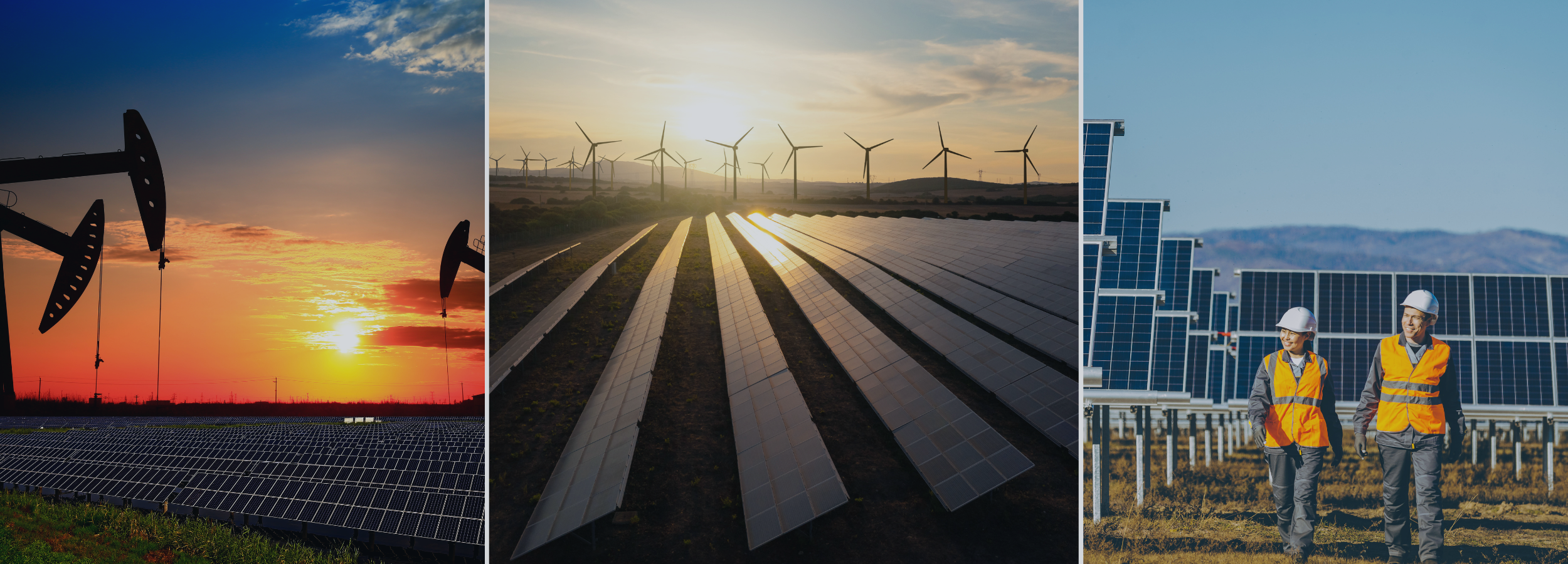
COMMON GROUNDS: Co-locating Wind and Solar Power on State and Federal Oil and Gas Land
Planet Reimagined is advancing an innovative bipartisan solution to sourcing the land the United States needs for large-scale new energy projects
Where is the Common Ground?
The U.S. carbon-free energy sector still holds long-term promise, with falling renewable energy costs and strong state-level leadership and investment. But federal policy is setting up new obstacles and rolling back critical incentives, making developers and investors uncertain and slowing progress. To meet the moment, we need changes that overcome those obstacles, keep up the pace, and speed up the momentum, including to unlock the millions of acres needed for utility-scale solar and wind. To do this, we need to work smarter to clear the way at the state and federal level.
Planet Reimagined’s pioneering Common Grounds initiative offers a bold, practical solution. By using land already leased for fossil fuel production–including up to 18 million acres of federal lands managed by the Bureau of Land Management (BLM) and an estimated 8 million acres of state trust lands across the West – we can fast-track renewable energy development without starting from scratch. Our 2023 Common Grounds report launched this co-location model, earning swift, bipartisan support.
At the federal level, Common Grounds worked to unlock the latent potential of BLM oil and gas leases for clean energy. Early-stage research and outreach from Planet Reimagined prompted a bipartisan Congressional letter to the Department of the Interior, urging former Secretary Deb Haaland to expedite solar and wind development on oil and gas leases. As covered in The New York Times, in 2024 the Department publicly confirmed that it would accept and encourage proposals for solar and wind projects on existing oil and gas leases. Though this support was reversed by the next Administration in 2025, the policy proposal sparked a bipartisan legislative push, with Senators from both parties introducing the Co-Location Energy Act in the Senate in March 2025. State-level leaders in New Mexico, Colorado, and Utah signaled interest in similar models.

Featured on:


Scaling the Solution
Despite the broader breakdown in support around renewables, Common Grounds continues to receive meaningful backing from select federal institutions and influential decision-makers while garnering strong support across state level policymakers, climate advocates, and industry representatives for this siting and permitting solution.
Scaling the solution has still run into two practical roadblocks: the data required to make co-location viable is fragmented across disconnected silos — from geospatial and environmental records to economic and infrastructure datasets. At the same time, permitting pathways for co-locating renewables with existing oil and gas infrastructure remain murky, offering little clear guidance. So far, no initiative has successfully integrated these pieces into a unified, actionable framework that can actually drive projects forward to development.
The Common Grounds model fills this gap. Built to unite a broad coalition, it strengthens national security, channels investment into energy communities, boosts the productivity of federal and state energy lands, and protects sensitive ecosystems — all while speeding up America’s transition to a clean energy future.
NEXT STEPS: Turning Research Into Action

Common Grounds is developing a first-of-its-kind tool that combines financial, geospatial, permitting, and policy data to help states proactively identify parcels with high co-location potential.
This platform will be a centralized resource to evaluate and plan renewable energy co-location projects on oil and gas leases across both state and federal jurisdictions. A core feature of the platform is that it aggregates permitting regulations and land use codes across counties in 20 western states. By compiling this data, the platform creates a standardized framework for evaluating permitting ease at the state level, showing where policy environments best support renewable energy development.
To make this information more accessible and actionable, the platform includes an insight engine that can answer detailed, parcel-specific questions. Drawn from localized permitting data, land use codes, and lease attributes, it provides tailored guidance on permitting pathways, development feasibility, and siting constraints for individual oil and gas leases—helping users navigate complex processes with clarity.
While policymakers and advocates can use the platform to improve land use codes and permitting frameworks, it is first and foremost for developers and operators. It clarifies pathways, identifies the value proposition of specific oil and gas leases for renewable energy siting, and highlights viable, lower-risk opportunities. By aggregating and streamlining key data into one place, the tool equips developers and industry decision-makers to pinpoint co-location sites, to move projects forward where they are feasible and can move fast.
This work builds on extensive mapping and analysis of the landscape for co-location, showing that many state and federal oil and gas leases are exceptionally well-positioned, often near existing transmission infrastructure and rich in solar and wind potential. Explore the interactive mapping tool to see where these opportunities are and how the platform supports smarter, faster project development.
Unlocking Potential Through Policy and Partnerships
Common Grounds advances co-location through targeted policy engagement, building on bipartisan federal successes to apply at the state level. We partner closely with state trust land offices and policymakers to develop dual-use leasing frameworks and streamline permitting processes clear, turning co-location into a practical, scalable, viable strategy for renewable energy development on state lands.
To establish co-location as a durable solution, Common Grounds forges strong partnerships across industry, civil society, and government. By connecting a diverse array of stakeholders — from fossil fuel operators to renewable developers and public-interest advocates — the initiative builds the shared understanding and alignment needed to move co-location from concept to widespread practice, positioning it as a core element of a just and pragmatic clean energy transition.
A Just Transition: Engaging Energy Communities
Through open-forum feedback sessions and targeted surveys across priority counties, locally tailored storytelling, and replicable benefit models, Common Grounds embeds the voices and priorities of frontline communities.
This research and advocacy includes assessing and providing locally and regionally adapted guidance on community benefit and workforce development frameworks. These ongoing efforts help shift the narrative around clean American-made energy toward a nonpartisan, win-win-win solution for people, economies, and the environment—reducing resistance from operators and communities and demonstrating that renewable projects can deliver meaningful benefits without igniting the flashpoint debate over immediately ending oil and gas activity.
A WIN-WIN-WIN

Siting renewable energy facilities on lands leased for fossil fuel extraction will drive investment in energy communities, increase the speed and efficiency of energy production on state and federal managed lands, and ensure that undeveloped public lands remain intact for future generations.
-
Sustaining Communities
Co-location creates localized employment opportunities in clean energy and creates new funding streams for communities heavily dependent on oil and gas royalties
Leveraging Existing Assets
In addition to qualifying for federal and state energy incentives, developers can save money by tapping into fossil fuel era infrastructure, from access roads to transmission lines
Delivering a Healthier Future
Deploying both small-scale and utility-scale solar installations adjacent to oil and gas operations lays the groundwork for a future without these polluting sources
-
Building on Previous Work
Because many oil and gas sites have existing rights-of-way, infrastructure, and prior environmental reviews, state and federal land managers can build on this groundwork to expedite co-located renewable energy projects, reducing permitting timelines and avoiding duplicative, site-by-site evaluations
Proactive Planning and Permitting
Proactive planning that formally identifies oil and gas leases with renewable energy potential in state land-use codes and federal resource management plans—and includes them in designated acceptability zones for solar and wind—signals to developers and industry decision-makers that these sites are viable, lower-risk opportunities worth pursuing
Expanding Use
Disturbed lands are ideal sites for co-location projects because they hold reduced value as wild or working lands without significant restoration
-
Protecting Wild and Working Lands
By siting new solar and wind projects as much as possible on land already disturbed and designated for energy development, more public lands can be left alone
Preventing False Choices
Certain public lands have been prioritized for fossil energy development, even in instances where renewable resources on the same land are more suitable and profitable. By opening a pathway to land-sharing, a forced decision between energy types becomes irrelevant
Maintaining Environmental Protections.
Though co-location can benefit from standardized environmental review processes, it does not necessitate any changes to NEPA
Policy Recommendations

The co-location of renewable energy facilities on oil and gas lease lands can unlock development opportunities with immediate impact. Planet Reimagined is continuing to drive policy conversations at the federal and state level to establish incentives for energy land sharing and co-location.
Explore our policy recommendations in more detail below:
-
Proactively plan for renewable energy priority zones by identifying low-impact, high-potential sites
Streamline permitting for renewable energy projects on oil and gas leases by leveraging existing environmental reviews already completed for those sites, and establishing a clear, consistent permitting pathway to give developers confidence that these locations are viable and actionable options for co-location
Align financial incentives for co-locating clean energy development with state and federal level environmental goals
-
Share revenue from wind and solar projects on public lands with local communities
Unlock new value on low-producing or non-producing oil and gas sites by creating a pathway to plug and reclaim wells and repurpose the land for renewable energy development.
-
Mandate emission cutting measures, including on-site renewables deployment for operational use
Expand categorical exclusion to include small-scale, on-site renewable projects
A Bipartisan Approach to Clean Energy
WATCH: A Bipartisan Letter from Congress
READ: Senator's Hickenlooper (D) and Curtis (R) sponsor the Co-location Energy Act


"A diverse energy grid through co-location is a sure-fire way to secure a resilient energy future for Utahns."U.S. Representative John Curtis (UT-3), Chairman, Conservative Climate Caucus
"I have worked with Planet Reimagined for a long time and have seen their advocacy for the future of our planet firsthand. This new policy report is innovative and proposes promising steps the Bureau of Land Management can take to move towards a clean energy future by co-locating renewable energy on lands already leased for oil and gas production."U.S. Representative Mike Levin (CA-49)In the News

TIME: Adam Met on Movement Building, Music, And His Path To Climate Advocacy

A Pop Star's Wonky Climate Campaign

WALL STREET JOURNAL: Bipartisan Backing to Explore Fast Tracking Solar and Wind on Oil-And-Gas Lands
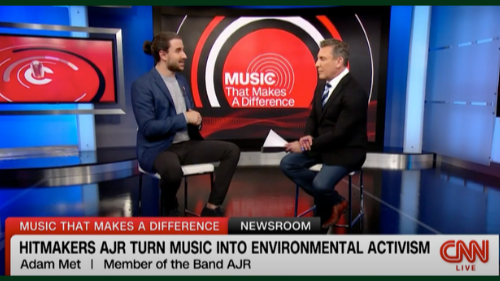
CNN: Hitmakers AJR Turn Music into Environmental Activism
EDF: Faster, affordable clean energy? This bipartisan bill delivers
Forbes: Clean Energy Expansion In The U.S. Requires Big Oil To Share Land
Our Partners


